

Fundamentals of
Automotive Systems
Welcome to the Automotive Design Center. Here you will find the products and resources you need to design smarter, safer vehicles. From electric to software-defined vehicles and higher levels of autonomy, whatever your automotive design challenge, our analog and embedded processing products and design resources help you deliver innovation faster and prepare for the road ahead.
All Categories
ADAS
Electrification
Software-Defined Vehicles

4 critical design challenges for 48V automotive systems
[ TECHNICAL ARTICLE ]
As vehicle power supply demands increase, the industry shift to 48V is accelerating. However, transitioning to 48V introduces new engineering complexities across power distribution, power conversion, load actuation, and communication. Read how TI is tackling these challenges head on.
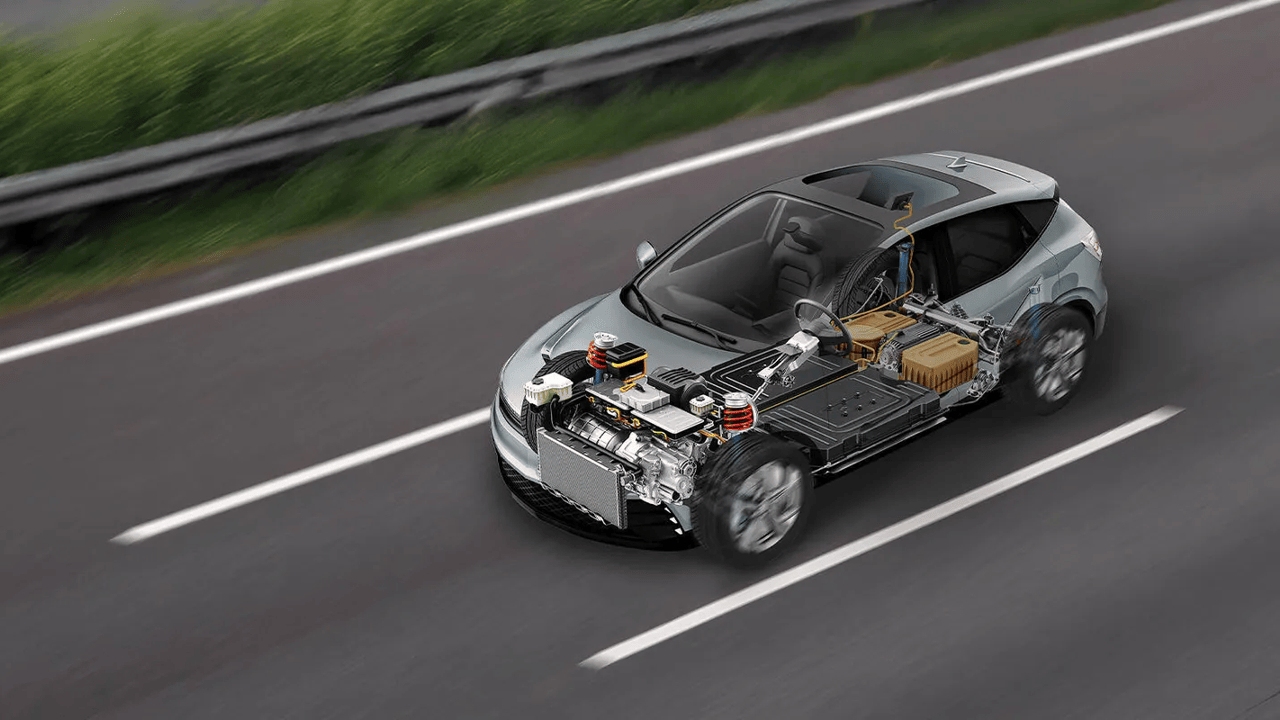
How by-wire technology is reshaping steering, braking and suspension
[ WHITE PAPER ]
Read this white paper to discover how TI's sensing, motor control and power management technologies give engineers the building blocks to tackle real-time control, functional safety compliance and scalable integration challenges in intelligent chassis design.

From detection to decision: An inside look at next-generation ADAS
[ WHITE PAPER ]
Achieving higher levels of vehicle autonomy requires every system to work together seamlessly, from perception to computation to communication and response. Read this white paper to explore how sensor fusion, AI-accelerated processing, and robust networking enable next-generation ADAS design.

The intelligent chassis: The silent upgrade that’s changing how cars move
[ CORPORATE BLOG ]
The intelligent chassis is transforming the driving experience through x-by-wire technology. Read this blog to learn how electronic steering, braking and suspension systems are unlocking the next era of autonomous driving.

3 semiconductor technologies that are redefining the EV experience
[ CORPORATE BLOG ]
Read about the latest technologies that are helping automakers overcome critical challenges in EV design from predictive battery management for enhanced safety to new onboard charger topologies for faster charging and advanced motor control algorithms for extended range.

The road to autonomous driving: ADAS innovation with TI experts
[ VIDEO ]
What will it take to bring autonomous vehicles to everyday drivers? TI experts discuss how AI-driven decision-making and sensor fusion are pushing ADAS into a new era of intelligent driving. Listen as they unpack the barriers to scaled autonomy and what it will take to overcome them.

TDA54-Q1 SoC for advanced AI in ADAS and SDVs
[ PRODUCT DETAILS ]
Featuring multi-core processing architecture, next-generation C7 ™ NPU for enhanced AI performance, and comprehensive safety features, this premium automotive SoC delivers the intelligent processing power and reliability needed for advanced vehicle systems.

Digital twin drives automotive innovation forward
[ WHITE PAPER ]
Accelerate time to market by up to a year with the TDA5 Virtual Development Kit (VDK). Discover how you can utilize a digital environment for reproducible testing of simulated driving scenarios without physical hardware.

TDA5 SoCs bring AI to an entire vehicle fleet
[ WHITE PAPER ]
The automotive industry is rapidly advancing toward autonomous vehicles, requiring more powerful, efficient processing solutions. Discover how TDA5 SoCs deliver power-optimized AI acceleration from 10-1200 TOPS, handling AI workloads more efficiently while enabling OEMs to achieve safe, physical AI.

Zone control module reference design
[ REFERENCE DESIGN ]
This reference design demonstrates key functions of next-generation zone control modules including power distribution, load actuation and in-vehicle networking.
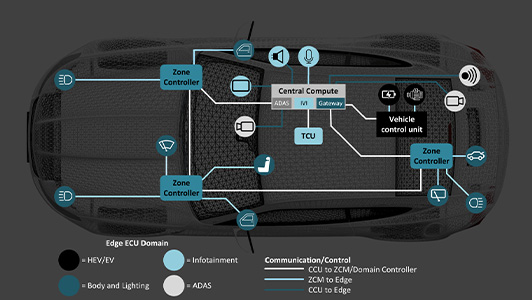
TSN in Automotive Zone Architectures: Enabling Ethernet Ring Architectures and AVB-Distributed Audio
[ WHITE PAPER ]
Learn how TSN increases reliability of a vehicle's network, explore Ethernet ring architecture implementations, and understand how to add audio playback to an Ethernet backbone using AVB.

Enabling a safer, more automated driving experience
[ PORTAL PAGE ]
We are helping automakers achieve their vision for a collision-free future. Explore our extensive catalog of ICs, reference designs and supporting content to help you design efficient ADAS functionality for any vehicle.

Inside Tomorrow’s SDVs: Integrating Remote-Controlled Edge Nodes
[ WHITE PAPER ]
Read our white paper to learn how remote-controlled edge nodes differ from traditional edge nodes and the different design considerations for implementing remote-controlled edge nodes in centralized SDV architectures.

High-voltage battery management system pyro-fuse driver design
[ REFERENCE DESIGN ]
The battery junction box of EVs protects the battery from excessive currents, permanent damage, or thermal runaway. This reference design demonstrates how to build an automotive-grade, functional safety-compliant singular dual-squib driver design.

Designing Safer, Smarter and More Connected Battery Management Systems
[ WHITE PAPER ]
This paper examines trends that are changing the structure of hybrid electric vehicle (HEV) and EV powertrains and how the technologies within battery management system (BMS) are shifting to support the requirements of safer, smarter vehicles.

Powering next-generation ADAS processors with TI Functional Safety-Compliant buck regulators
[ TECHNICAL ARTICLE ]
The rapid evolution of advanced driver assistance systems increases the complexity and demand for real-time data processing. Learn how TI is addressing the resulting power management challenges.

Low-power in-cabin sensing design
[ REFERENCE DESIGN ]
This low-power, small form factor reference design is based on AWRL6432, TI's single-chip 60GHz automotive radar sensor and is targeted for in-cabin sensing applications like child presence detection (CPD) and intruder detection (ID).

An Introduction to Automotive Lidar
[ WHITE PAPER ]
As vehicles are becoming more autonomous, lidar is emerging as an important sensing technology. Learn about the advantages of lidar and recent innovations making it smaller and more affordable.

How a Zone Architecture Paves the Way to a Fully Software-Defined Vehicle
[ WHITE PAPER ]
Take a look into the transition to software-defined vehicles and how moving to a zone architecture addresses power distribution, sensor and actuator and data communication challenges.

Paving the way for the 48V in automotive
[ PORTAL PAGE ]
The transition from 12V to 48V in the automotive market unlocks opportunities to enhance vehicle features, improve drive range and fuel efficiency, and reduce wire harness cost and weight. Learn how TI's intelligent and scalable solutions enable a seamless transition to 48V architectures.

Smarter power distribution: Shaping the future of automotive technology
[ WHITE PAPER ]
Read this white paper to learn how the emergence of zone architectures, 48V systems and other trends has enabled smarter, safer, more optimized power distribution in vehicles.

Enhancing automated parking applications with VinFast and TI
[ VIDEO ]
Watch to see the automated parking from Vinfast and how the system’s high-detection rate is powered by advanced camera inputs using TI processors. The advanced obstactle detection...

At the wheel with TI: trends in vehicle autonomy
[ VIDEO ]
NCAP and R79 regulations are standardizing emergency braking and backup cameras in more economical classes of vehicles. While semiconductors have been in cars for decades, hear from our experts in how TI is helping to proliferate enhanced safety, convenience and comfort...

Looking for the future of autonomous driving? It’s in your car today
[ BLOG ]
Read to learn how today’s semiconductors are powering the current and future landscape of autonomous driving.

BAW clocks: A better FIT for ADAS
[ TECHNICAL ARTICLE ]
Learn how BAW clocks are redefining ADAS designs with precise timing and superior reliability across any vehicle architecture.

Lidar leaps forward: Enabling more precise, longer-range detection
[ TECHNICAL ARTICLE ]
Read how innovative lidar technology helps vehicles autonomously detect objects quicker and more accurately.
The importance of hardware emulation when developing a next-generation automotive BMS
[ TECHNICAL ARTICLE ]
Implement zone architectures to optimize power distribution and vehicle networking, which are critical functions for software-defined vehicles.

48V Automotive Systems: Why Now?
[ WHITE PAPER ]
In recent conversations with auto manufacturers, 48V low-voltage rail has come up frequently. But why now? 48V systems aren’t new. They’ve helped improve efficiency and performance in mild hybrid electric vehicles (MHEVs) for years.

Software-Defined Vehicles Shift the Future of Automotive Electronics Into Gear
[ WHITE PAPER ]
Software-defined vehicles are creating new opportunities for automotive manufacturers to decrease the time and cost involved in developing new vehicles and functions, continue improving the driver experience...
Prev
1
2
3
Next
From detection to decision: An inside look at next-generation ADAS
[ WHITE PAPER ]
Achieving higher levels of vehicle autonomy requires every system to work together seamlessly, from perception to computation to communication and response. Read this white paper to explore how sensor fusion, AI-accelerated processing, and robust networking enable next-generation ADAS design.
The road to autonomous driving: ADAS innovation with TI experts
[ VIDEO ]
What will it take to bring autonomous vehicles to everyday drivers? TI experts discuss how AI-driven decision-making and sensor fusion are pushing ADAS into a new era of intelligent driving. Listen as they unpack the barriers to scaled autonomy and what it will take to overcome them.
TDA54-Q1 SoC for advanced AI in ADAS and SDVs
[ PRODUCT DETAILS ]
Featuring multi-core processing architecture, next-generation C7 ™ NPU for enhanced AI performance, and comprehensive safety features, this premium automotive SoC delivers the intelligent processing power and reliability needed for advanced vehicle systems.
Enabling a safer, more automated driving experience
[ PORTAL PAGE ]
We are helping automakers achieve their vision for a collision-free future. Explore our extensive catalog of ICs, reference designs and supporting content to help you design efficient ADAS functionality for any vehicle.
Powering next-generation ADAS processors with TI Functional Safety-Compliant buck regulators
[ TECHNICAL ARTICLE ]
The rapid evolution of advanced driver assistance systems increases the complexity and demand for real-time data processing. Learn how TI is addressing the resulting power management challenges.
Low-power in-cabin sensing design
[ REFERENCE DESIGN ]
This low-power, small form factor reference design is based on AWRL6432, TI's single-chip 60GHz automotive radar sensor and is targeted for in-cabin sensing applications like child presence detection (CPD) and intruder detection (ID).
An Introduction to Automotive Lidar
[ WHITE PAPER ]
As vehicles are becoming more autonomous, lidar is emerging as an important sensing technology. Learn about the advantages of lidar and recent innovations making it smaller and more affordable.
Enhancing automated parking applications with VinFast and TI
[ VIDEO ]
Watch to see the automated parking from Vinfast and how the system’s high-detection rate is powered by advanced camera inputs using TI processors. The advanced obstactle detection...
At the wheel with TI: trends in vehicle autonomy
[ VIDEO ]
NCAP and R79 regulations are standardizing emergency braking and backup cameras in more economical classes of vehicles. While semiconductors have been in cars for decades, hear from our experts in how TI is helping to proliferate enhanced safety, convenience and comfort...
Looking for the future of autonomous driving? It’s in your car today
[ BLOG ]
Read to learn how today’s semiconductors are powering the current and future landscape of autonomous driving.
BAW clocks: A better FIT for ADAS
[ TECHNICAL ARTICLE ]
Learn how BAW clocks are redefining ADAS designs with precise timing and superior reliability across any vehicle architecture.
Lidar leaps forward: Enabling more precise, longer-range detection
[ TECHNICAL ARTICLE ]
Read how innovative lidar technology helps vehicles autonomously detect objects quicker and more accurately.
4 critical design challenges for 48V automotive systems
[ TECHNICAL ARTICLE ]
As vehicle power supply demands increase, the industry shift to 48V is accelerating. However, transitioning to 48V introduces new engineering complexities across power distribution, power conversion, load actuation, and communication. Read how TI is tackling these challenges head on.
3 semiconductor technologies that are redefining the EV experience
[ CORPORATE BLOG ]
Read about the latest technologies that are helping automakers overcome critical challenges in EV design from predictive battery management for enhanced safety to new onboard charger topologies for faster charging and advanced motor control algorithms for extended range.
High-voltage battery management system pyro-fuse driver design
[ REFERENCE DESIGN ]
The battery junction box of EVs protects the battery from excessive currents, permanent damage, or thermal runaway. This reference design demonstrates how to build an automotive-grade, functional safety-compliant singular dual-squib driver design.
Designing Safer, Smarter and More Connected Battery Management Systems
[ WHITE PAPER ]
This paper examines trends that are changing the structure of hybrid electric vehicle (HEV) and EV powertrains and how the technologies within battery management system (BMS) are shifting to support the requirements of safer, smarter vehicles.
Paving the way for the 48V in automotive
[ PORTAL PAGE ]
The transition from 12V to 48V in the automotive market unlocks opportunities to enhance vehicle features, improve drive range and fuel efficiency, and reduce wire harness cost and weight. Learn how TI's intelligent and scalable solutions enable a seamless transition to 48V architectures.
Smarter power distribution: Shaping the future of automotive technology
[ WHITE PAPER ]
Read this white paper to learn how the emergence of zone architectures, 48V systems and other trends has enabled smarter, safer, more optimized power distribution in vehicles.
48V Automotive Systems: Why Now?
[ WHITE PAPER ]
In recent conversations with auto manufacturers, 48V low-voltage rail has come up frequently. But why now? 48V systems aren’t new. They’ve helped improve efficiency and performance in mild hybrid electric vehicles (MHEVs) for years.
How by-wire technology is reshaping steering, braking and suspension
[ WHITE PAPER ]
Read this white paper to discover how TI's sensing, motor control and power management technologies give engineers the building blocks to tackle real-time control, functional safety compliance and scalable integration challenges in intelligent chassis design.
The intelligent chassis: The silent upgrade that’s changing how cars move
[ CORPORATE BLOG ]
The intelligent chassis is transforming the driving experience through x-by-wire technology. Read this blog to learn how electronic steering, braking and suspension systems are unlocking the next era of autonomous driving.
Digital twin drives automotive innovation forward
[ WHITE PAPER ]
Accelerate time to market by up to a year with the TDA5 Virtual Development Kit (VDK). Discover how you can utilize a digital environment for reproducible testing of simulated driving scenarios without physical hardware.
TDA5 SoCs bring AI to an entire vehicle fleet
[ WHITE PAPER ]
The automotive industry is rapidly advancing toward autonomous vehicles, requiring more powerful, efficient processing solutions. Discover how TDA5 SoCs deliver power-optimized AI acceleration from 10-1200 TOPS, handling AI workloads more efficiently while enabling OEMs to achieve safe, physical AI.
Zone control module reference design
[ REFERENCE DESIGN ]
This reference design demonstrates key functions of next-generation zone control modules including power distribution, load actuation and in-vehicle networking.
TSN in Automotive Zone Architectures: Enabling Ethernet Ring Architectures and AVB-Distributed Audio
[ WHITE PAPER ]
Learn how TSN increases reliability of a vehicle's network, explore Ethernet ring architecture implementations, and understand how to add audio playback to an Ethernet backbone using AVB.
Inside Tomorrow’s SDVs: Integrating Remote-Controlled Edge Nodes
[ WHITE PAPER ]
Read our white paper to learn how remote-controlled edge nodes differ from traditional edge nodes and the different design considerations for implementing remote-controlled edge nodes in centralized SDV architectures.
How a Zone Architecture Paves the Way to a Fully Software-Defined Vehicle
[ WHITE PAPER ]
Take a look into the transition to software-defined vehicles and how moving to a zone architecture addresses power distribution, sensor and actuator and data communication challenges.
Software-Defined Vehicles Shift the Future of Automotive Electronics Into Gear
[ WHITE PAPER ]
Software-defined vehicles are creating new opportunities for automotive manufacturers to decrease the time and cost involved in developing new vehicles and functions, continue improving the driver experience...